
Automating capacity forecasts at the TSO/DSO connection point
9 September 2026
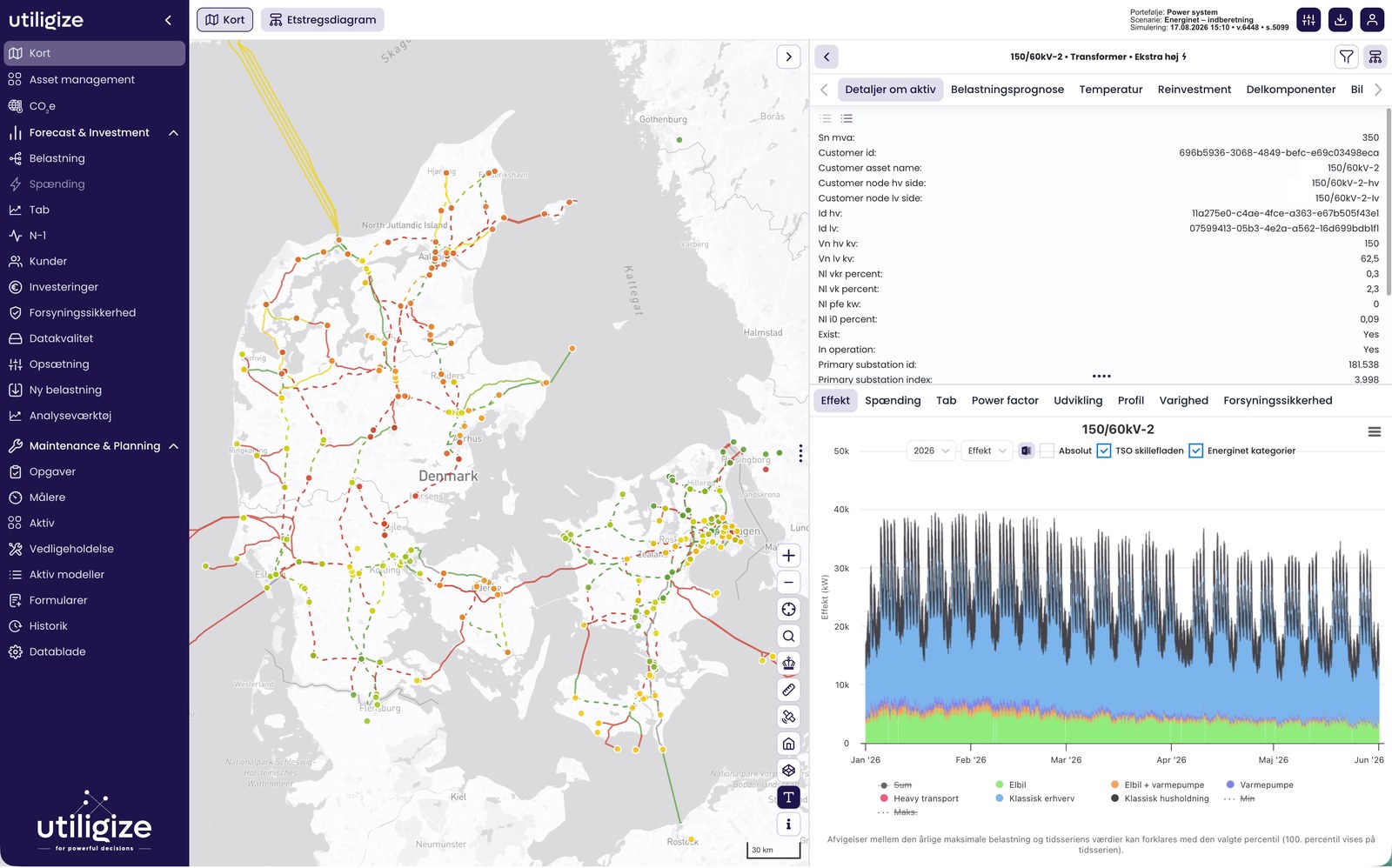
In August, Utiligize helped five Danish DSOs report their expected capacity needs to Energinet, the Danish TSO, which uses the data to decide where to reinforce the transmission grid.
The work is crucial for solving Energinet’s temporary block on large new connections, caused by capacity constraints at national level.
We worked through the summer holidays to meet the new reporting standards, and automated it, so the next round is a rerun rather than a rebuild – with happy customers as a result:

“We are very pleased with the result we have received from Utiligize, and very happy with the collaboration.”
Elisa Hove de Lasson
Director, Netselskabet Elværk

“The method description is technical and detailed, but at the same time clear and easy to read. It is impressive work.”
Michael Møller
Department Engineer, grid planning, RAH Net
What Energinet asked for
Three data sets, each reported per transformer substation at the TSO/DSO connection point (the substations where the distribution grid meets Energinet’s transmission grid).
- Historical peak loads. The measured starting point for each substation, split into Energinet’s fixed categories.
- Organic growth. A ten-year forecast, 2026 to 2035, of the growth from connection cases below 3 MW – the many small ones that never appear on a pipeline list.
- Small district heating projects. Electric boilers and heat pumps for district heating below 3 MW.
How we built it
All three were built bottom-up from each DSO’s own grid model and 15-minute or hourly metering, so each substation figure can be broken back down to the installations behind it.
- Consumption was categorised from what the meters actually show. Machine learning identifies customer types and picks out EV charging and heat pumps, so the categories reflect what customers do rather than what a customer register says.
- The exchange with Energinet is modelled per substation and aggregated into Energinet’s new categories.
We look forward to closer collaboration between Energinet and the Danish DSOs, with automated short- and long-term forecasts that support flexibility and clear the capacity problems behind the backlog of connection requests.